

Quickstart (Flutter) • Documentation • Discord


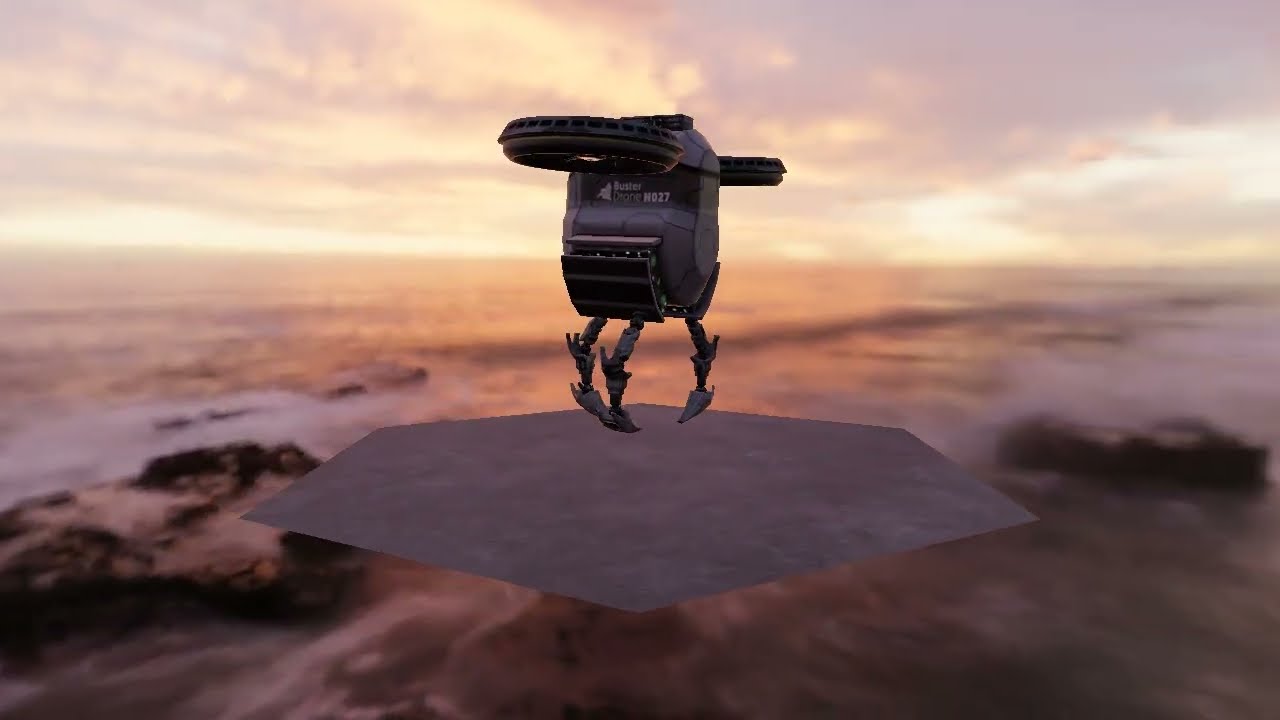
- Supports iOS (arm64), MacOS (arm64/x64), Android (arm64), Windows (x64) (>= 10), Web/WASM
- glTF, KTX, PNG & JPEG texture support
- camera/entity manipulation with mouse (desktop) and gestures (mobile)
- skinning + morph animations
Uses the Filament PBR engine.
Use filamentVersion to select the matching Filament release when compiling
custom materials with matc:
import 'package:thermion_dart/filament_version.dart';

void main() {
  print(filamentVersion); // v1.77.2
}
It is also exported by package:thermion_dart/thermion_dart.dart. The constant
works with hosted, Git and path dependencies, and is the version used by the
native build hook. Recompile your custom materials when it changes.
After initializing Filament, FilamentApp.instance!.materialVersion gives the
material format number reported by matc --version. This number is distinct
from the Filament release version. Compile custom materials with matc from
the same Filament release as the application.
createMaterial rejects incompatible format versions and malformed chunk
layouts with a Dart FormatException before calling Filament's material
builder. It does not validate every payload or backend requirement; other
invalid packages can still cause a native panic.
Runtime packages use Filament's performance optimization (matc's default,
or -O), rather than the size optimization selected by matc -S. They are
not promised to be byte-identical to offline packages. Both runtime APIs
embed the compilation flags and their input source for inspection; full
packages embed the source after in-memory includes have been resolved.
The web runtime compiler targets WebGL (OPENGL); it does not generate
WebGPU materials.
Instead of precompiling .filamat packages with matc, apps that need to
generate materials at runtime (e.g. user-authored or procedurally generated
shaders) can compile GLSL material source directly on the device:
final material = await FilamentApp.instance!.compileMaterialSource(
  'my_material',
  '''
  void material(inout MaterialInputs material) {
    prepareMaterial(material);
    material.baseColor.rgb = float3(1.0, 0.0, 0.0);
  }
  ''',
  shading: MaterialShading.lit,
);
For full .mat sources — the same format the matc tool accepts, with a
material { ... } configuration block (parameters, shading model, variants,
...) and #include directives — use compileMaterialPackage. Includes are
resolved from an in-memory map (exact-name match, no filesystem access):
final material = await FilamentApp.instance!.compileMaterialPackage(
  'my_material',
  '''
  material {
      name : "MyMaterial",
      shadingModel : unlit,
      parameters : [ { type : float4, name : baseColor } ]
  }
  fragment {
      #include "common.glsl"
      void material(inout MaterialInputs material) {
          prepareMaterial(material);
          material.baseColor = tint(materialParams.baseColor);
      }
  }
  ''',
  includes: {
    'common.glsl': 'vec4 tint(vec4 c) { return c * vec4(1.0, 0.9, 0.8, 1.0); }',
  },
);
Both APIs require linking libfilamat — Filament's offline material compiler,
which bakes in glslang and SPIRV-Tools — plus libmatp (the .mat parser
behind matc) for compileMaterialPackage, so they are opt-in. Add the flag
to your app's pubspec.yaml:
hooks:
  user_defines:
    thermion_dart:
      runtime_materials: true
The flag adds roughly 8–45 MB to the native library depending on platform and
build mode (release libfilamat.a is ~45 MB; less is carried into the final
binary). FilamentApp.instance!.runtimeMaterialsSupported reports whether the
loaded build has it; compileMaterialSource and compileMaterialPackage
throw UnsupportedError otherwise. On web, the flag additionally selects a filamat-enabled engine
variant — the build hook fetches thermion_dart-<sha>-web-runtime-materials.zip
instead of the default wasm (~20 MB larger; it links libfilamat, the default
build dead-code-eliminates it). Compilation
is synchronous and CPU-intensive (hundreds of milliseconds) — run it before
startup or from a background isolate.
A live web demo — a GLSL editor that compiles and applies materials in the
browser — is in examples/dart/material_editor.
The default viewer loads glTF assets, renders them with their authored materials,
and displays skyboxes and solid backgrounds with zero embedded helper packages.
For each feature your app uses, set its material key to true under
hooks.user_defines.thermion_dart.materials in the root pubspec.
| Feature | Material keys |
|---|---|
| Textured quads and background images | image |
| Grid, transform gizmo, translation axis, skeleton overlay | grid, gizmo, translation_axis, bone_overlay, respectively |
| Selection highlights | Both silhouette and edge_outline |
| Wireframes, world-space normal colors, selected triangle edges | wireframe, normal_color, sharp_edge, respectively |
| Embedded packages for UV capture, linear depth, fixed-size unlit geometry | capture_uv, linear_depth, unlit_fixed_size, respectively |
For example, an app using the sharp-edge view needs one entry:
hooks:
  user_defines:
    thermion_dart:
      materials:
        sharp_edge: true
For a triangle with corners A, B, C, mask values 1, 2, and 4 select edges BC,
CA, and AB respectively. Combine them with bitwise OR. This example draws only AB.
The existing geometry helper supplies the barycentric coordinates in the first
three components of attribute0. Write the same mask into the fourth component
at each corner before uploading the geometry.
final geometry = GeometryUtils.duplicateVerticesWithBarycentrics(
  Float32List.fromList([-1, -1, 0, 1, -1, 0, 0, 1, 0]), // A, B, C
  [0, 1, 2],
);
for (var corner = 0; corner < 3; corner++) {
  geometry.attribute0[4 * corner + 3] = 4; // AB
}
final material = await app.createBuiltInMaterial(BuiltInMaterial.sharpEdge);
final instance = await material.createInstance();
final asset = await viewer.createGeometry(geometry, materialInstances: [instance]);
await viewer.addToScene(asset);
The caller owns the material and its instances. Remove their renderables, destroy
the instances, then destroy the material. Requesting a helper omitted from the
engine raises a StateError that names its pubspec key.
The build hook compiles only the enabled helper shaders from source
(thermion_dart/hook/materials/*.mat) using the version-matched, cached
Filament tools (matc / resgen). Compiled packages are cached per material
under thermion_dart/.dart_tool/thermion_dart/materials/ so repeat builds,
flutter clean, and config changes skip recompilation. On native builds, the
hook links the compiled .c files for the selected graphics backend into
libthermion_dart. On Flutter web builds (flutter run -d chrome,
flutter build web), it embeds the enabled packages in web/thermion_dart.wasm.
Filament creates each material on first use.
For a Flutter app inside a pub workspace, set web_directory: apps/viewer/web
alongside materials under hooks.user_defines.thermion_dart in the workspace
pubspec. The path is relative to that pubspec.
For plain Dart web apps (dart compile js / dart compile wasm), pass
--materials to thermion_dart:download_web to fetch the slim engine and
embed the requested materials in the app’s copy of thermion_dart.wasm:
dart run thermion_dart:download_web -o web --materials grid,wireframe,gizmoPass each required key explicitly. Omit --materials for an app that uses no helpers.
From the command line:
flutter channel stable
flutter upgrade
flutter config --enable-native-assets
In your Flutter app:
@override
  Widget build(BuildContext context) {
    return Scaffold(
        body: Stack(children: [
        Positioned.fill(
            child: ViewerWidget(
          assetPath: "assets/cube.glb",
          skyboxPath: "assets/default_env_skybox.ktx",
          iblPath: "assets/default_env_ibl.ktx",
          transformToUnitCube: true,
          initialCameraPosition: Vector3(0, 0, 6),
          background: Colors.blue,
          manipulatorType: ManipulatorType.ORBIT,
          onViewerAvailable: (viewer) async {
            await Future.delayed(const Duration(seconds: 5));
            await viewer.removeSkybox();
          },
          initial: Container(
            color: Colors.red,
          ),
        ))]));
  }
the first time you build an app that consumes this package, the Dart native-assets build system will download static binaries from Cloudflare. This may take a few minutes (depending on which platform you are compiling for). These will be cached, so subsequent builds will be much faster.
Web builds need two files (thermion_dart.js and thermion_dart.wasm) sitting alongside your app's web/index.html. In the normal case, thermion_dart's build hook fetches them for you on flutter run/flutter build web — no extra step required:
flutter build webThe hook reads native/web/web.version, downloads the matching artifacts from Cloudflare R2, caches them under .dart_tool/thermion_dart/web/<sha>/, and copies them into your app's web/ directory. Subsequent builds are instant unless the version changes.
If you want to fetch them ahead of time (e.g. for an offline build), you can do so manually:
dart run thermion_dart:download_web            # → ./web/
dart run thermion_dart:download_web -o custom # → custom/If you're modifying thermion_dart's native code and want to test on web without bumping native/web/web.version and waiting for CI to rebuild the R2 artifacts, build the emscripten target locally and opt in via your app's pubspec.yaml:
hooks:
  user_defines:
    thermion_dart:
      web_local: true
# Build the wasm (from native/web/build):
emcmake cmake ..
emmake make
# Then run/build your Flutter app:
flutter run -d chromeWhen set, the build hook copies thermion_dart.{js,wasm} from thermion_dart/native/web/build/build/out/ into your app's web/ directory instead of downloading from R2. Remove the flag (or set it to false) to go back to the pinned prebuilt.
Custom browser clients can build the web engine with
-DTHERMION_WEB_MAIN_THREAD=ON (default: OFF). Initialize the engine and
call Thermion from the browser's main thread. Commands and completion
callbacks execute on that calling thread. Thermion does not create its own
render worker or transfer the canvas to one.
Serialize calls on that thread. Drive frames by calling FilamentApp.render()
from the application's animation loop. Command dispatch also drains pending
Filament commands and upload-release callbacks without requiring a frame.
Asynchronous glTF loading yields between progress polls so decoder tasks and
browser events can run.
The default build continues rendering through its worker loop. In that
build, FilamentApp.render() runs Dart's request-frame hooks but does not
request or await a rendered frame.
The main-thread option does not disable Emscripten pthread support or Filament's internal helpers. Enabling it requires rebuilding the Wasm engine. A Dart define or an existing worker bundle cannot enable it. No performance improvement is implied by the option.
CI publishes the main-thread engine alongside the default one: the build hook
fetches it automatically when you set web_variant under
hooks.user_defines.thermion_dart in your app's pubspec.yaml — no local
toolchain needed:
hooks:
  user_defines:
    thermion_dart:
      web_variant: main_thread
Unknown values log a warning and fall back to the default engine.
web_local: true composes with this: it then copies from
native/web/build-main-thread/build/out/ (build that variant locally with
emcmake cmake .. -DTHERMION_WEB_MAIN_THREAD=ON into a separate directory).
runtime_materials: true (the same user define that enables runtime material
compilation on native) also selects a web engine variant with libfilamat
linked — compileMaterialSource then works in the browser. The build hook
fetches thermion_dart-<sha>-web-runtime-materials.zip (~20 MB larger than
the default engine; the default dead-code-eliminates filamat). It composes
with web_variant and web_local like any other variant. See the live
editor demo in examples/dart/material_editor.
Once this lands, a matching thermion_dart-<sha>-web-main-thread.zip appears
on R2 only after the next native-changed push to develop bumps
web.version — until then main-thread consumers must keep building locally.
The package:test suite runs on Chrome via a wrapper. Do not invoke dart test -p chrome directly — the multithreaded WASM build needs crossOriginIsolated (a COOP/COEP proxy), and each test file needs an HTML host that loads thermion_dart.js and the thermion_canvas. The wrapper handles both:
# from thermion_dart/
dart run tool/web_test_runner.dart --assets=../examples/assets test/texture_tests.dart
It stamps per-file test/<name>.html, starts tool/coi_proxy.dart on port 8899 (injecting the isolation headers and bridging thermion.assets / thermion.output sentinel hosts for asset reads and capture writes), runs dart test -p chrome, and prints a per-file summary.
Flags: --port=N, --timeout=DUR, --concurrency=N, --assets=DIR, --no-proxy (reuse an external proxy), --clean (delete the generated HTML on exit). With no test file arguments, it runs every test/*_test.dart and test/*_tests.dart.
test/thermion_dart.{js,wasm} are gitignored symlinks into native/web/build/build/out/, so they stay current after every make wasm.
Thermion uses the Filament Physically Based Rendering engine under the hood.
Special thanks to odd-io for sponsoring work on supporting Windows, raycasting, testing and documentation.
Thank you to the following people:
- @Hannnes1 for help migrating to
native-assets - @jarrodcolburn for documentation contributions
- @daverin for MacOS library contributions
- @LukasPoque for CI/refactoring work
- @alexmercerind for his work on integrating ANGLE textures on Flutter Windows
- @BrutalCoding for documentation fixes
- @chenriji for testing and bug fixes
- @JesperBellenbaum for Vulkan/Windows improvements
- @repentsinner for Linux/EGL/Windows stability + improvements
- @mwahnish for bug fixes and web improvements
- @aenriqu for bone animation fixes
- @mushogenshin for Android & Windows swapchain & backend fixes
- @arthur-lfn for Linux/Vulkan fixes
- @wperchinumio for detailed bug reports on memory leaks and missing features